
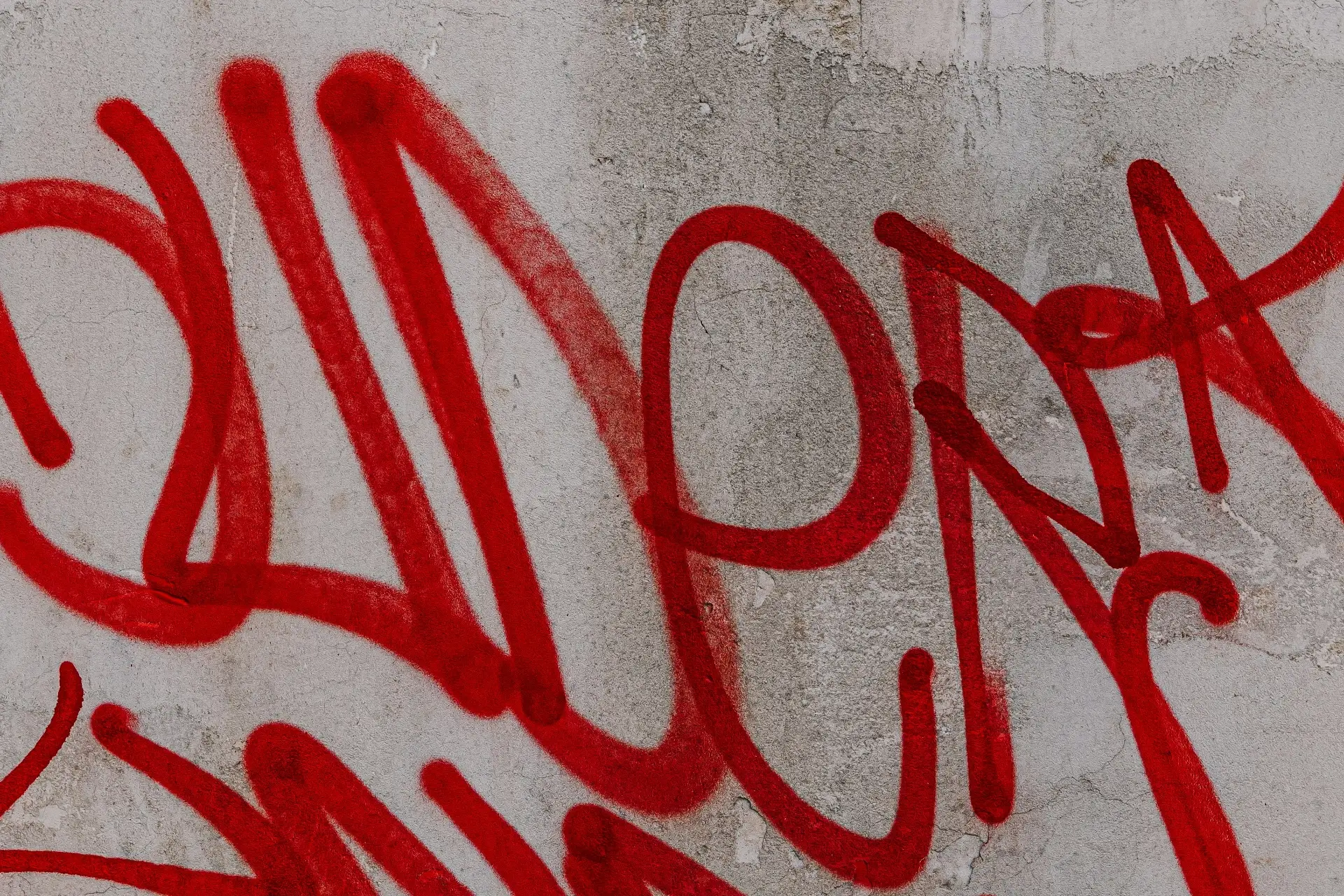
Council is committed to keeping Glenorchy clean and welcoming by responding quickly to graffiti, with early removal a priority to deter repeat tagging.
Council also supports approved murals and public art as positive alternatives.
Free graffiti removal kits
Council offers free removal kits to residents and businesses to help tackle graffiti quickly. Council officers can also visit businesses to assist with cleaning or painting over affected surfaces. To request a kit, email gccmail@gcc.tas.gov.au or call 03 6216 6800 (available while stocks last).
Who is responsible?
Private property owners are generally responsible for removing graffiti from their own property. However, Council may step in where:
- Graffiti is within one metre of a driveway or laneway
- It was applied from public land
- It’s highly visible from an arterial road or within the CBD
- It’s racist, obscene or offensive
- The property owner lacks the resources to remove it
- There’s a coordinated area improvement program underway
Council will not remove graffiti from sandstone or heritage-listed buildings, or from surfaces higher than 2.4 metres above ground level — a specialist should be engaged in these cases. Council may still offer advice or a free kit to support prompt clean-up.
For more detail, consult our Graffiti Management Policy (PDF).
Graffiti FAQ
Is graffiti illegal?
Yes. Placing graffiti on public or private property without permission is a criminal offence under section 15CA of the Police Offences Act 1935. This includes writing, painting, stencilling or slogans on any property without permission. If you see someone applying graffiti, report it to police immediately on 131 444.
Why should graffiti be removed quickly?
Prompt removal makes the job easier and helps deter further tagging. The longer graffiti is left, the deeper it bleeds into the surface. It also reduces exposure of the tagger’s work — and graffiti tends to attract more graffiti, so one tag can quickly become several.
Who is responsible for removal?
Council property: Council is responsible for graffiti on roads, footpaths, street furniture, sculptures, artworks, bridges and Council buildings. All graffiti on Council property is tracked on a digital mapping system.
Private property: Owners, occupiers and managers are responsible for removing graffiti from their own property. Under the Glenorchy City Council Environmental Amenity By-Law 2017, graffiti must be removed, painted over, or otherwise blocked from public view. Council may advise owners to act, and may use its own resources where graffiti is offensive or of a political/religious nature.
How can I prevent graffiti on my property?
There are several effective deterrents:
- Plant dense shrubs, creepers or install trellis along walls and fences
- Paint in dark colours to reduce the contrast of tags
- Keep your property well maintained — neglected properties are more likely to be targeted
- Remove obstructions that block views from the street
- Ensure the site is well-lit at night, ideally with motion sensor lights
- Install CCTV cameras or monitoring signage
- Use high-gloss paint or anti-graffiti coatings to make future removal easier
- Remove graffiti as soon as it appears
How do I remove graffiti?
For painted or protected surfaces (wood, metal, concrete with a topcoat), liquid removal using a commercial product such as ‘Muck Off’ or a citrus-oil based remover is recommended. Painting over is also a straightforward option for many surfaces.
Does Council offer any support?
Yes — Council offers free graffiti removal kits to residents and businesses, and officers can attend in person to assist with cleaning or painting over affected areas. Council also works with young people to encourage artwork in designated areas as a positive alternative to illegal tagging.
Unsure what something on this page means? Check out Our Glossary.